Alabama Governor Commutes Death Sentence for Toforest Johnson Amid Evidence Concerns
Governor Kay Ivey has commuted Toforest Johnson's death penalty to life without parole, citing insufficient direct evidence in his 1995 murder conviction.
U.S.·
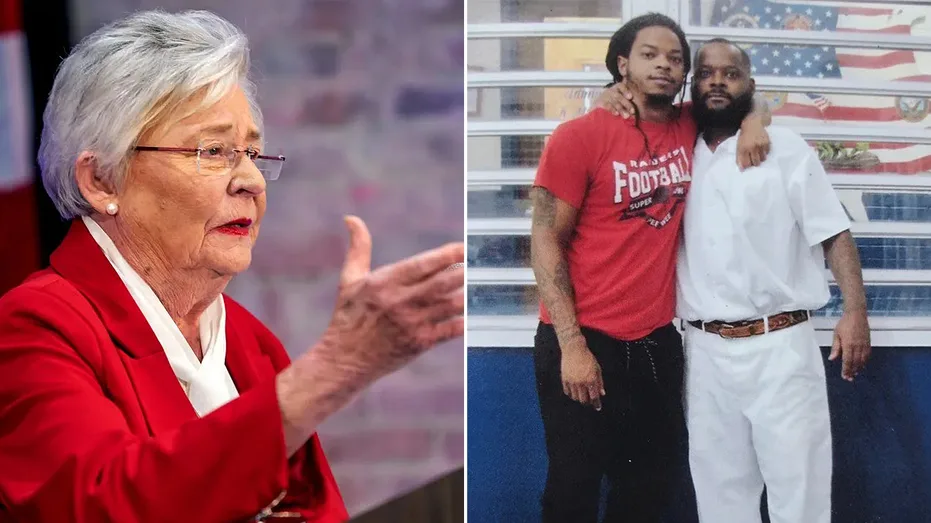
Alabama Governor Kay Ivey, a Republican, has commuted the death sentence of an inmate after the current Jefferson County district attorney, along with several former judges and prosecutors, expressed significant concerns regarding the evidence in his conviction. Toforest Johnson, who has consistently asserted his innocence since his conviction for the 1995 murder of Jefferson County Deputy Sheriff William Hardy, will now serve a sentence of life in prison without the possibility of parole. He remains incarcerated at Holman Correctional Facility.
In a public statement, Governor Ivey explained her decision. “When presented with Mr. Johnson’s case, I had concerns there was not enough direct evidence to carry out the most serious punishment, death,” she stated. She clarified that her action does not constitute a determination of innocence, but rather an acknowledgment that “the circumstances of this case justify commuting his death sentence to life imprisonment, without possibility of parole.”
This commutation marks the third instance Governor Ivey has commuted a death sentence since assuming office in 2017. During her tenure, which is set to conclude in January due to term limits, she has also overseen 27 executions. The governor's decision to spare Johnson’s life came despite Alabama Attorney General Steve Marshall’s recent appeal to her to deny the clemency request, urging her to “respect the jury's decision” and the rulings made by courts that had reviewed Johnson's case.
Details of the 1995 Murder and Johnson's Defense
The incident in question occurred on July 19, 1995, when Deputy Hardy was fatally shot twice in the head while performing off-duty security duties outside a hotel in Birmingham. Johnson has maintained that he was on the opposite side of the city when the shooting took place.
Ty Alper, one of Johnson’s attorneys, conveyed his and his client's appreciation to Governor Ivey for her “diligently reviewing Toforest’s case and taking action to spare an innocent man from execution.” However, Alper affirmed that their legal team will persist in their efforts to overturn the conviction. “Toforest Johnson is innocent. Now it is up to the courts to overturn his conviction and grant him a new trial. We will keep fighting until he is home with his family,” Alper declared in a statement.
Mounting Doubts and Calls for Reinvestigation
Johnson's legal representatives have been engaged in a protracted legal battle spanning several years to secure a new trial. This ongoing campaign has garnered national attention and widespread support from a diverse group, including prominent legal professionals—such as the original prosecutor in his case—and public figures like Kim Kardashian.
Numerous former judges and prosecutors have also joined the chorus of supporters advocating for a new trial for Johnson, citing significant questions surrounding his conviction. Among these notable figures are former Alabama Attorney General Bill Baxley, former Chief Justices of the Alabama Supreme Court Sonny Hornsby and Drayton Nabers, and other retired judges and prosecutors who have submitted legal briefs or authored editorials in support of a new trial.
Jefferson County District Attorney Danny Carr, who was elected in 2018, is another key figure who has publicly supported Johnson’s request for a new trial. In a court filing from 2024, Carr asserted that the “evidence in this case has unraveled over 20 years,” casting further doubt on the conviction.
Carr highlighted several reasons for his skepticism, including the existence of credible alibi witnesses who place Johnson in a different location at the time of the shooting. He also raised concerns about the reliability of the primary prosecution witness, who “claimed she overheard Johnson confess to the murder on a three-way phone call on which she was eavesdropping.”
During Johnson's 1998 trial, this woman testified that she was eavesdropping on a phone conversation when she heard a male voice, which she identified as Johnson's, admitting to the shooting. It was later revealed that she received a $5,000 reward in 2001 for her cooperation in the case. Johnson’s lawyers have alleged that the state failed to disclose evidence indicating this monetary incentive for her testimony, suggesting a potential conflict of interest or bias that could have impacted the trial's fairness.
Related Stories
South Dakota Hotel Workers Crowned Champions at Las Vegas Housekeeping Olympics
Housekeeping teams from across the nation converged in Las Vegas for the 36th annual Housekeeping Olympics, a unique competition honoring hospitality workers. South Dakota's LIV Hospitality team claimed the overall
Nov 19
Major Guatemalan Drug Kingpin "The Kraken" Apprehended in California After Extensive Hunt
Axel Bladimir Montejo Saenz, known as "Kraken" and an alleged Guatemalan cocaine kingpin, has been arrested in San Diego. He faces charges linked to a major drug trafficking network, and federal officials are also
Nov 18

Chicago-Bound Flight Sees Onboard Altercation, FBI Responds Upon Arrival
Police and FBI agents responded to Chicago O'Hare International Airport after a physical altercation occurred on a Qatar Airways flight from Doha. Cockpit communications indicated a passenger assaulted another,
Nov 17
Young Paraglider Dies in Illinois Crash After Reported Mid-Flight Emergency
A 21-year-old paraglider from Woodridge, Giovanni Lopez, tragically died Saturday after a reported in-flight emergency caused him to crash in a Plainfield field. Authorities are investigating the incident, and an
Nov 16